Reading & writing
Information for Parents



Information for Parents

One of our biggest priorities is that all children leave North Ormesby Primary Academy as confident, fluent readers with a clear, comprehensive understanding of a wide range of texts, and that they have developed a love of reading. We aim for our children to have:
Our curriculum develops reading skills by following a learning journey based on the Five Pillars of Reading:a sequential formal beginning with phonemic awareness leading to phonics, followed by fluency and understanding new vocabulary that will enable them to have strong comprehension skills. This approach is cohesive and builds on appropriate conceptual components in order for children to work towards becoming confident and able readers. We build on pre-reading and reading skills moving from 'learning to read', to 'reading to learn' (as well as reading for pleasure!).
We use the Read Write Inc. reading programme to cement those early reading skills that are the building blocks of all learning to come. Meticulous teaching engagement ensures that children are given an appropriately levelled reading book to match their phonic and reading ability, and to determine when children can be given a more challenging text. Once children have successfully completed the RWI phonics programme, they progress on to levelled texts from Oxford Reading Tree. Our reading pathway enables children to be able to talk about the books that they read alongside developing comprehension skills so that they become skillful in inferring, retrieving, explaining, summarising and predicting as they make their journey through school.
Phonics teaching occurs daily and lessons are broken down into small steps to build confidence and independence. In reading lessons, all children are exposed to a variety of carefully-chosen core texts that have links with previous and future learning across school. These texts promote interest and learning in other curriculum areas such as PSHE and History which supports children's understanding that reading is an important skill across all areas of learning. To ensure learning is embedded, children begin daily lessons with tasks that retrieve prior learning before moving on to main content; this is vital to maintain what has already been learnt but to also provide the scaffold for new learning. Children read in various formats, independently,with a peer, as a class and are read to regularly by an adult. This exposure to different formats of reading keeps learning exciting and engaging.
The structure of teaching across school allows children to be secure in the fundamentals of reading before progressing to reading for understanding by analysing texts. Staff regularly assess children in phonics and monitor the book band that children move on through to reading. Once fluency is established, understanding of text is then challenged further with lessons that begin to focus more on questioning through the key stage-specific domains of reading which increase in amount and depth to upper key stage. The teaching of decoding words, building fluency and exploring new vocabulary is explicitly taught to every unit of reading to all age groups. Teachers regularly use data to monitor progress and assign interventions in a timely manner to ensure that all pupils receive the support they need to access learning and grow a love of reading.
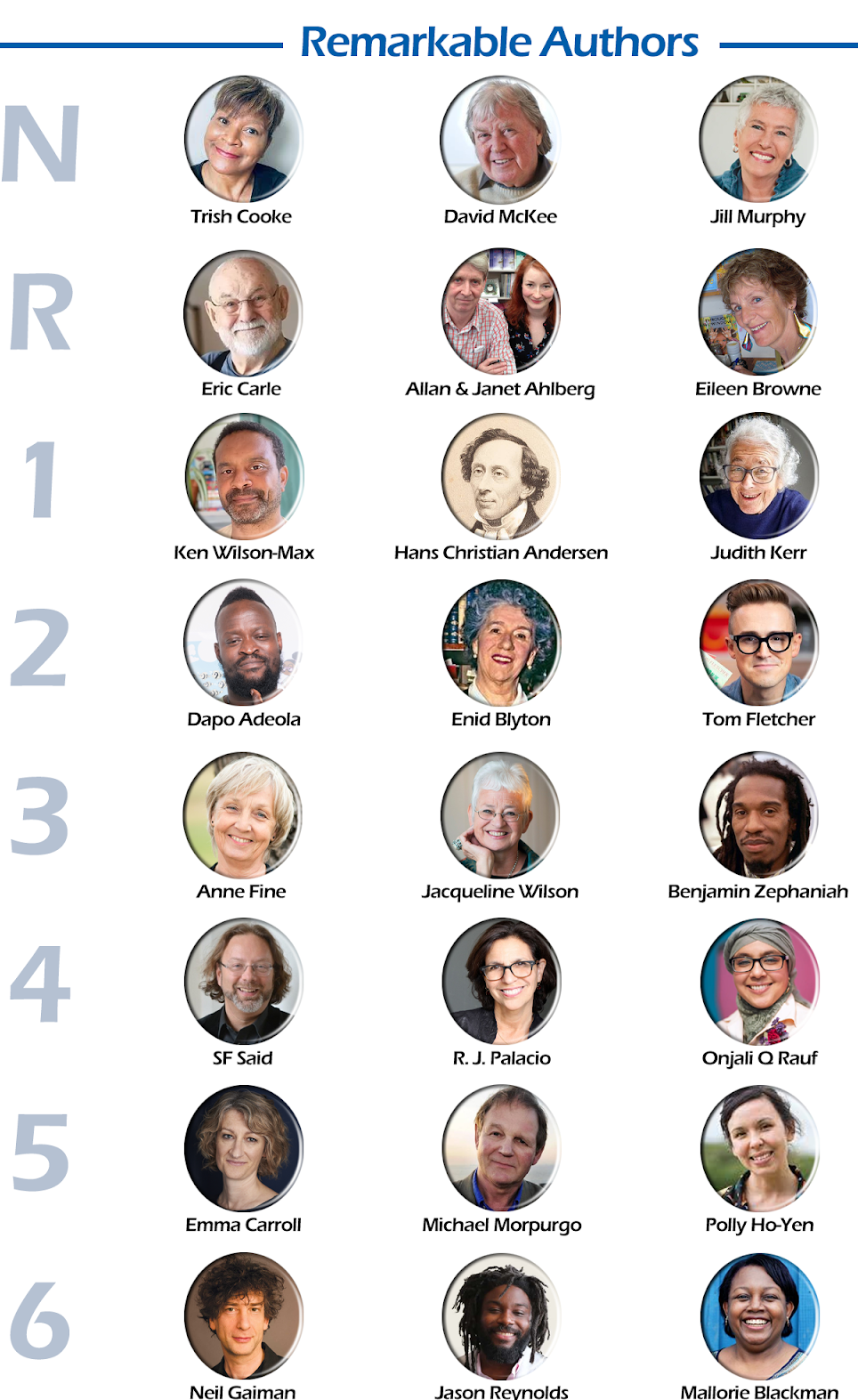
We are proud of the skills we equip our children with in order to write cohesively for a range of purposes and audiences. Children are challenged to be thoughtful, creative and inspirational in how they paint pictures with their words and uncover a whole host of new vocabulary in the process. Children are not only taught the skill to write, but how to assess, explain an edit their work and the work of others. These elements of reasoning deepen the understanding of purpose, and purpose is why we write.Children are galvanised to take the awe and amazement they experience as a reader and use the taught techniques and their own innovation to recreate this magic in their individual way as an author.
From Y1-Y6, we follow the My Mastery curriculum to build on the skills first learnt in EYFS which means that from the very first marks made, right through to gripping five-part narratives and persuasive letters, our students build upon their knowledge continuously over their primary school careers. In every year group, each genre of writing is supported by the National Curriculum statements for SPAG (spelling, punctuation and grammar). The acquisition of these new skills is transferred into writing and strengthens the knowledge of the features and layout that appear most often in the genres studied;this allows students to identify differences in their own style of writing for different purposes. Alongside the introduction of new concepts,knowledge is recapped and extended so our children progress through also heavily embedded into the other subjects of the skills in writing are crucial to aid understanding in order to make progress in other areas of the curriculum.
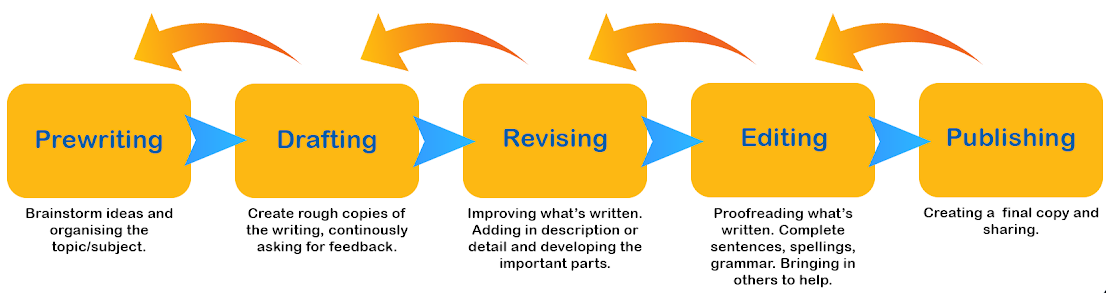
Children work on planning for writing and creating drafts, followed by sharing work and careful editing, before publishing. In the planning and editing stages, text marking is one of the vital skills we use which allows children to compare their own work to existing pieces of writing of the same genre in order to see what needs to be included. We also love feedback! Whether it be in-class with staff or at our school 'Twitter' page - often engaging with real authors and poets. As with all subjects, the model we work through leads to mastery where, after being equipped with the vital skills, children will be able to write independently and extensively in a range of genres, for a range of purposes and in different formalities.
The pairing of inspirational age-appropriate texts and high-quality examples are at the heart of how we inspire our children to write. Explicit teaching of grammatical features allows children to become experts in a specific area and allow them to independently apply new learning. Students are also taught how to publish writing in various formats such as bookwork, word processing and live presentations to improve oracy skills. Having 'Packs' so heavily integrated in our daily offer at school, gives us yet more opportunity to showcase our published places of wonderful work and allows our children to feel proud of their achievements.

A phonics handbook can be found here


.png)


